
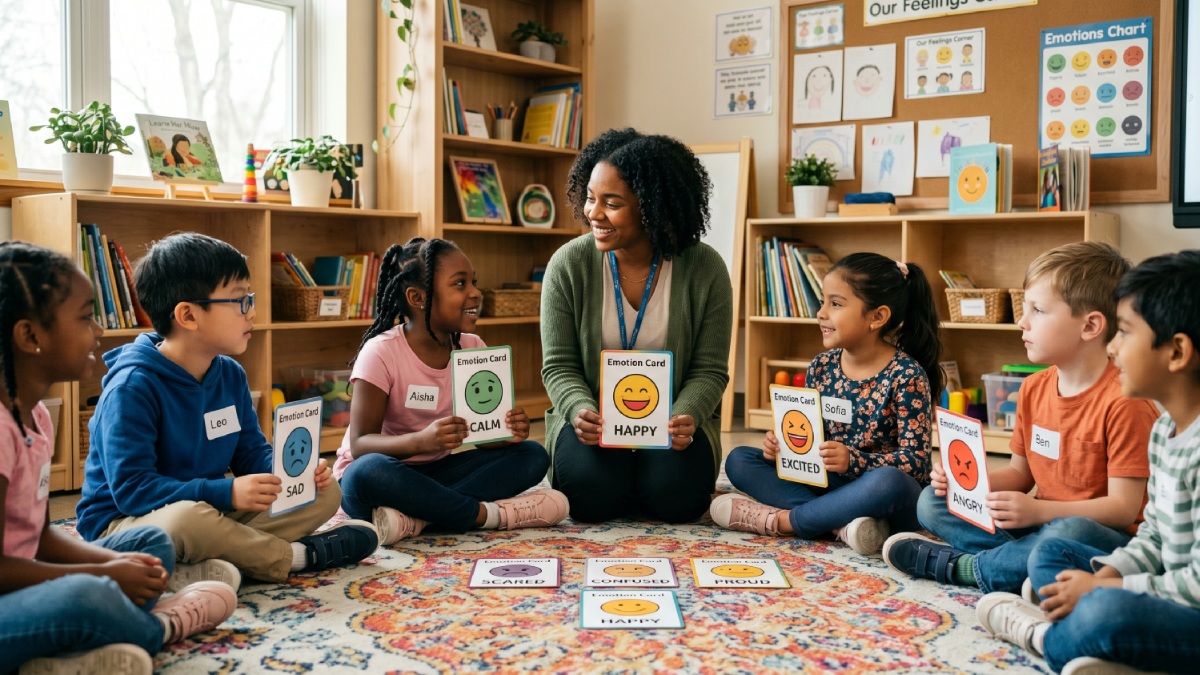
Walk into any staff room during a Tuesday planning period and you’ll likely hear the same conversation: teachers trying to figure out why their carefully chosen social emotional learning activities aren’t landing the way the curriculum guide promised. The worksheets get completed. The posters go up. Yet the playground conflicts continue, and that one student still can’t name what they’re feeling before it turns into a meltdown.
Recent data from CASEL (Collaborative for Academic, Social, and Emotional Learning) suggests that schools implementing systematic SEL programmes see behavioural incidents drop by roughly 28%, while academic performance improves by an average of 11 percentile points. But here’s what those statistics don’t show: the gap between activities that exist on paper and activities that genuinely shift how children regulate emotions, build relationships, and make responsible decisions.
In working with primary and secondary classrooms across England over the past several years, a clear pattern emerged. The activities that stick aren’t necessarily the most elaborate ones. Often, the simplest routines—repeated consistently, embedded into daily transitions rather than bolted on as separate lessons—produce the most noticeable shifts in classroom climate. We’ve watched a five-minute morning check-in transform a chaotic Year 4 class into one where children start naming emotions unprompted by half-term.
This guide moves beyond generic lists. You’ll find activities organised by the five core SEL competencies, practical guidance on age-appropriate adaptations, honest discussion of common implementation pitfalls, and answers to the questions teachers and parents actually ask when trying to build emotional skills that last beyond the activity itself.
Understanding the Five Core Competencies Behind Effective SEL Activities
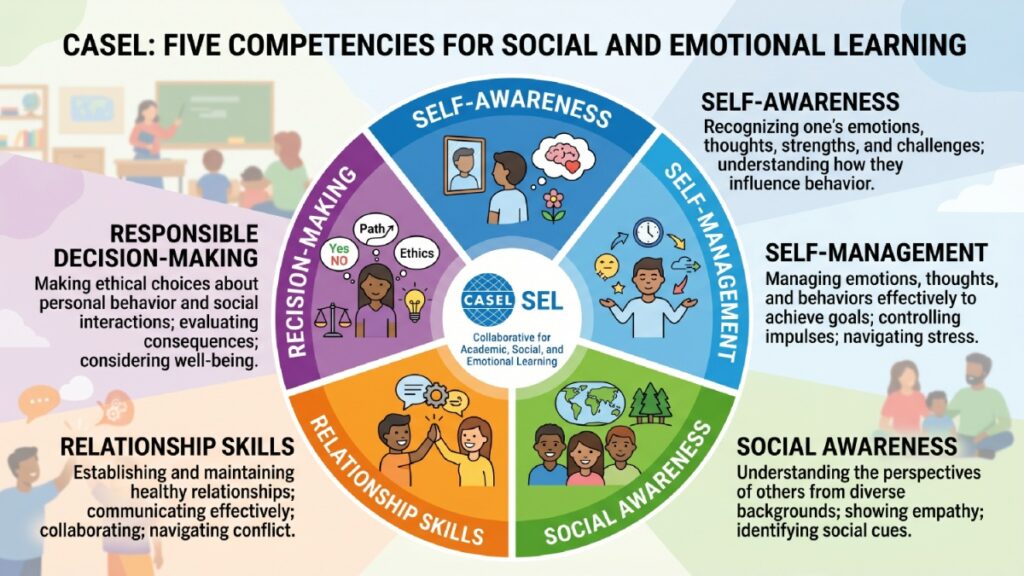
Before diving into specific activities, it helps to understand the framework most educational psychologists and curriculum designers work from. The CASEL framework identifies five interconnected competencies: self-awareness, self-management, social awareness, relationship skills, and responsible decision-making.
Each competency builds on the others. A child can’t manage emotions they don’t recognise. They can’t build healthy relationships without social awareness. And responsible decision-making requires all four other skills working together under pressure.
Why Most Schools Focus on Just One or Two Competencies
In practice, we’ve noticed that schools often gravitate heavily toward self-awareness activities—emotion check-ins, feelings charts, mood journals—while neglecting relationship skills and responsible decision-making almost entirely. This creates pupils who can identify that they’re frustrated but haven’t practised what to actually do with that frustration in a group setting.
A balanced approach means rotating focus across all five areas throughout a term, not running the same emotion-identification circle time every single day. Children who only ever practise naming feelings, without corresponding practice in self-regulation strategies, often become more aware of distress without gaining the tools to manage it.
Matching Activities to Developmental Stages
Social emotional learning activities for early years children (ages 3-5) work best when embedded in play—puppet shows, sorting games with emotion faces, and simple breathing exercises framed as “blowing up a balloon in your tummy.” By upper primary (ages 9-11), children can engage with more abstract concepts: perspective-taking scenarios, peer mediation roles, and reflective journaling.
Secondary students often resist activities that feel babyish or performative. The most effective secondary-level SEL activities tend to be embedded within existing subjects—using literature discussions to explore characters’ emotional decisions, or structuring group projects to deliberately practise conflict resolution.
Morning Routine Activities That Set the Emotional Tone for the Day
The first fifteen minutes of a school day shape everything that follows. Children arrive carrying whatever happened on the walk to school, at breakfast, or the night before—and without a structured way to process that, it spills into the classroom in less productive ways.
Practical Tip: The single highest-impact change we’ve observed in classrooms isn’t a fancy activity—it’s simply giving children 90 seconds to register how they’re feeling before academic work begins. Classes that adopted this consistently for eight weeks showed noticeably fewer mid-morning behavioural disruptions.
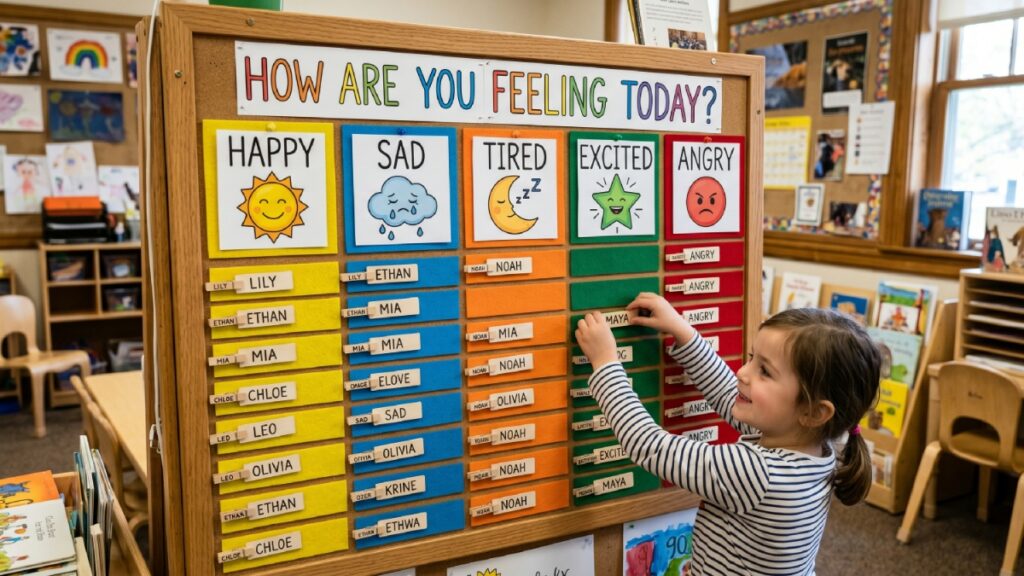
The Feelings Check-In Board
A simple visual board where children move a peg, magnet, or sticky note to indicate their current emotional state—happy, sad, anxious, excited, tired, angry—takes under two minutes per child but provides teachers with immediate insight into who might need extra support that day.
Gratitude Circles
Each child shares one thing they’re grateful for, however small. We’ve found that children initially default to material answers (“my new trainers”) but within three to four weeks, responses shift toward relationships and experiences—a meaningful indicator of growing emotional vocabulary.
Here are several morning routine options worth rotating through:
- Weather report check-ins — Children describe their emotional state using weather metaphors (“I feel like a cloudy day with some sun breaking through”), which gives less verbal children an accessible entry point.
- Two-minute mindful breathing — Simple guided breathing using counting (4 seconds in, 4 seconds hold, 4 seconds out) helps regulate the nervous system before transitioning to focused work.
- Compliment chains — One child compliments another, who then compliments someone else, building both social awareness and a positive classroom atmosphere.
- Goal-setting whispers — Children quietly tell a partner one thing they want to accomplish that day, building accountability and self-management skills.
Self-Regulation Strategies for Managing Big Emotions
Self-management is often the competency that frustrated teachers most want quick fixes for—and unfortunately, it’s the one that requires the most patience to develop. Children don’t learn to regulate emotions by being told to “calm down.” They learn through repeated practice of specific strategies during calm moments, so those strategies become automatic during stressful ones.
Building a Calm-Down Corner That Actually Gets Used
A designated calm-down space fails when it’s introduced as a punishment (“go sit in the calm corner”) rather than a tool children choose to use. In classrooms where this distinction was made explicit—framing the space as a resource, not a consequence—usage increased substantially, and importantly, children began using it proactively before escalation rather than after.
Effective calm-down corners typically include:
- Sensory tools — Stress balls, textured fabrics, or fidget items that provide tactile regulation without disrupting others.
- Visual breathing guides — Simple cards showing breathing patterns (such as tracing a star shape while breathing) that don’t require reading ability.
- Emotion thermometers — Visual scales helping children identify intensity levels, which research suggests improves a child’s ability to intervene before reaching a “10.”
- Timer with no time pressure language — A sand timer or simple visual timer, framed as “use as long as you need,” not “you have five minutes.”
Attention: A calm-down corner introduced without explicit, repeated teaching of how and why to use it often becomes either ignored entirely or—worse—becomes a place children associate with shame. The teaching of the tool matters as much as the tool itself.
The “Name It to Tame It” Technique
Drawing from neuroscience research popularised by Dr. Daniel Siegel, this approach involves helping children verbally label their emotional state, which activates the prefrontal cortex and reduces activity in the amygdala. In practical terms, this looks like a teacher calmly saying, “It looks like you’re feeling really frustrated right now,” rather than addressing the behaviour first.
In our experience, this technique takes weeks of modelling before children begin using it independently, but once internalised, it becomes one of the most transferable lifelong skills a classroom can offer.
Building Empathy Through Perspective-Taking Exercises
Social awareness—understanding and empathising with others, including those from different backgrounds—doesn’t develop through lectures about kindness. It develops through structured opportunities to genuinely consider another person’s experience.
Role Reversal Storytelling
Children retell a recent classroom conflict or scenario from the perspective of the other person involved. This requires careful facilitation; without guidance, children often produce caricatured or unfair versions of the other person’s viewpoint. The teacher’s role is to gently probe: “What might they have been worried about? What might they not have known?”
Community Helper Interviews
Inviting visitors—a local nurse, firefighter, shopkeeper, or even a school caretaker—to discuss their daily challenges and emotions connected to their work helps children understand that adults experience a full emotional range too, not just authority and calm.
A useful comparison of empathy-building approaches by age group:
| Approach | Ages 5-7 | Ages 8-11 | Ages 12+ |
|---|---|---|---|
| Format | Picture books with discussion | Role-play scenarios | Real-world case studies |
| Focus | Recognising others’ facial expressions | Understanding “why” behind reactions | Systemic empathy (poverty, discrimination) |
| Time needed | 10-15 minutes | 20-30 minutes | 40-60 minutes |
| Teacher involvement | High (direct guidance) | Moderate (facilitation) | Lower (discussion-based) |
Cross-Age Buddy Systems
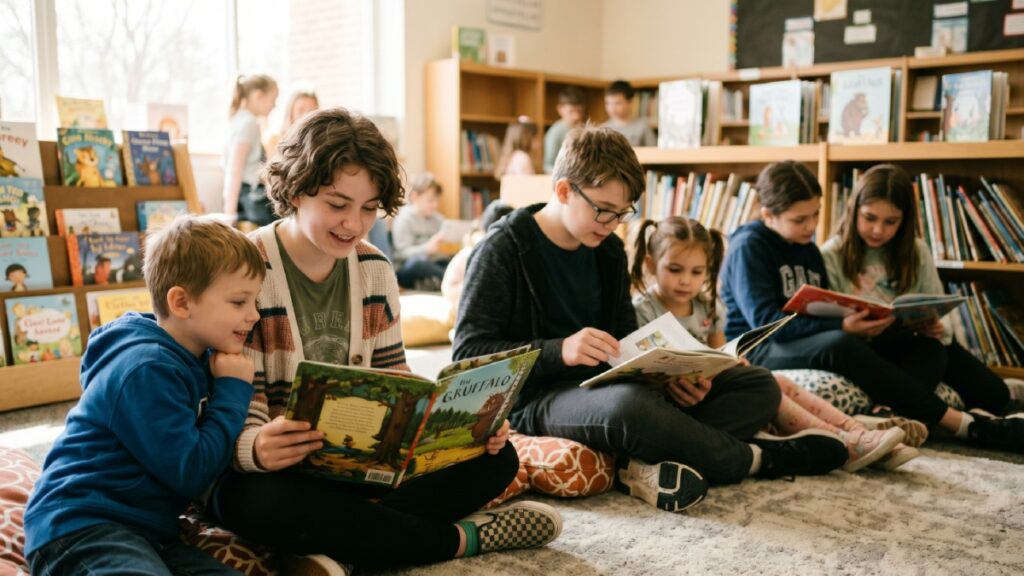
Pairing older students with younger ones for regular reading or activity sessions builds empathy in both directions. Older students develop patience and responsibility; younger students gain a relatable role model. Schools that have implemented buddy systems consistently for a full term report improved playground behaviour from older students, particularly those who previously struggled with peer relationships among same-age classmates.
Conflict Resolution Activities for Building Relationship Skills
Relationship skills—communication, teamwork, and conflict resolution—are arguably the competency most directly tied to immediate classroom climate, yet they’re frequently the most under-taught because conflict resolution requires teachers to step back rather than immediately solve problems for children.
Peer Mediation Programmes
Training a rotating group of students (typically upper primary or secondary age) to facilitate low-stakes peer disputes—who gets to use the football first, disagreements over game rules—gives children practical experience with negotiation and active listening that adult-mediated resolutions rarely provide.
Setting up an effective peer mediation system involves several steps:
- Select and train mediators carefully — Choose a diverse group of students, not just those who are already naturally diplomatic, since the training itself builds skills in students who might otherwise struggle socially.
- Establish clear scripts and boundaries — Mediators need structured language (“Can you tell me what happened from your side?”) and clear limits on what disputes are appropriate for peer mediation versus adult intervention.
- Create a visible, low-pressure mediation space — A designated table or corner where mediation happens removes the spectacle factor and signals that this is a normal, supported process.
- Review and debrief regularly — Weekly check-ins with mediators about what’s working and what’s challenging keep the programme sustainable and catch issues before they escalate.
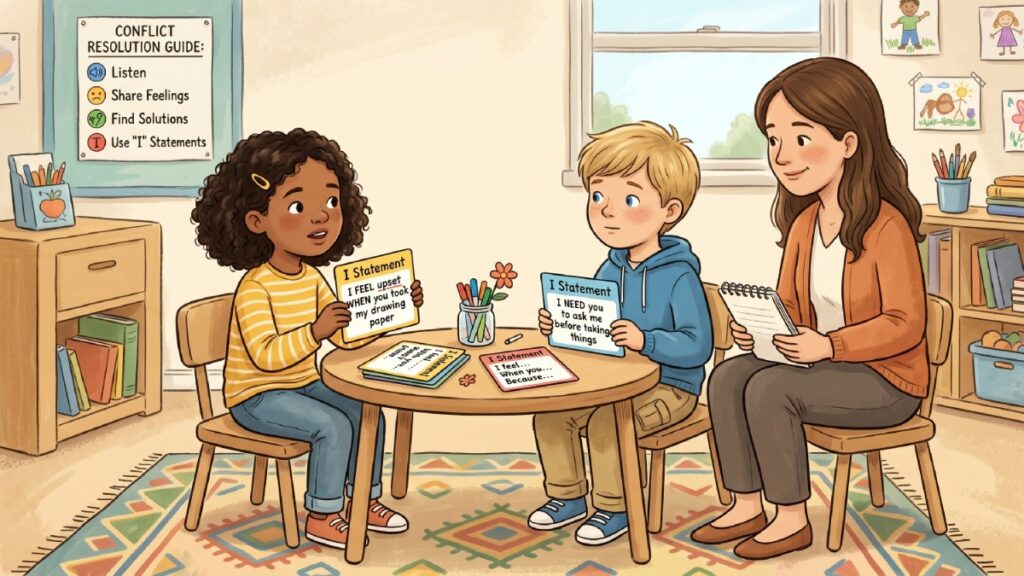
The “I Statement” Communication Framework
Teaching children to express grievances using “I feel ___ when ___ happens, and I need ___” rather than accusatory “you” statements is one of the most widely used relationship skills techniques—and one of the most commonly taught incorrectly. Many programmes teach the formula without addressing the underlying emotional regulation needed to use it during an actual conflict, when emotions run high.
Best Practice: Practise “I statements” exclusively during calm, hypothetical scenarios for several weeks before expecting children to use them during real conflicts. Skipping this step is the most common reason this technique fails in practice.
Decision-Making Scenarios That Build Real-World Judgement
Responsible decision-making is the competency most closely tied to long-term outcomes—academic persistence, healthy choices in adolescence, and ethical reasoning—yet it’s often the least practised in classrooms because it requires presenting children with genuinely ambiguous situations rather than scenarios with an obvious “correct” answer.
Scenario Cards With No Clean Answer
Presenting situations like “Your friend asks you to lie to a teacher to cover for them—what do you do, and what might happen either way?” works far better than scenarios with an obvious moral lesson. Children need practice sitting with the discomfort of competing values: loyalty versus honesty, fairness versus kindness.
Classroom Voting and Consensus-Building
Involving children in genuine decisions—how to arrange the reading corner, what classroom rules should look like, how to resolve a recurring lunchtime issue—gives them practice weighing group needs against individual preferences. The key word is “genuine.” Children quickly identify when a “vote” has a predetermined outcome, and this undermines trust in the entire process.
We’ve observed that classes given real decision-making power over small matters (seating arrangements, class pet care schedules) develop noticeably more thoughtful contributions to bigger discussions later in the term, likely because they’ve experienced their input actually mattering.
Integrating SEL Activities Into Academic Subjects
One of the most persistent misconceptions about social emotional learning activities is that they require separate time slots, competing with already-packed curriculums. In reality, some of the most effective integration happens within existing subjects.
Literature and Character Emotion Mapping
When studying any narrative text, pausing to discuss a character’s emotional journey—what they felt, why, and what choices resulted from those feelings—builds both literary comprehension and emotional vocabulary simultaneously. This requires minimal additional planning time but significant payoff.
Maths and Productive Struggle
Framing challenging maths problems explicitly around the emotional experience of struggle—naming frustration as a normal and even useful part of learning, rather than a sign of failure—builds self-management skills directly tied to academic resilience. Teachers who explicitly discuss the feeling of being “stuck” before offering strategies report students persisting longer with difficult problems.
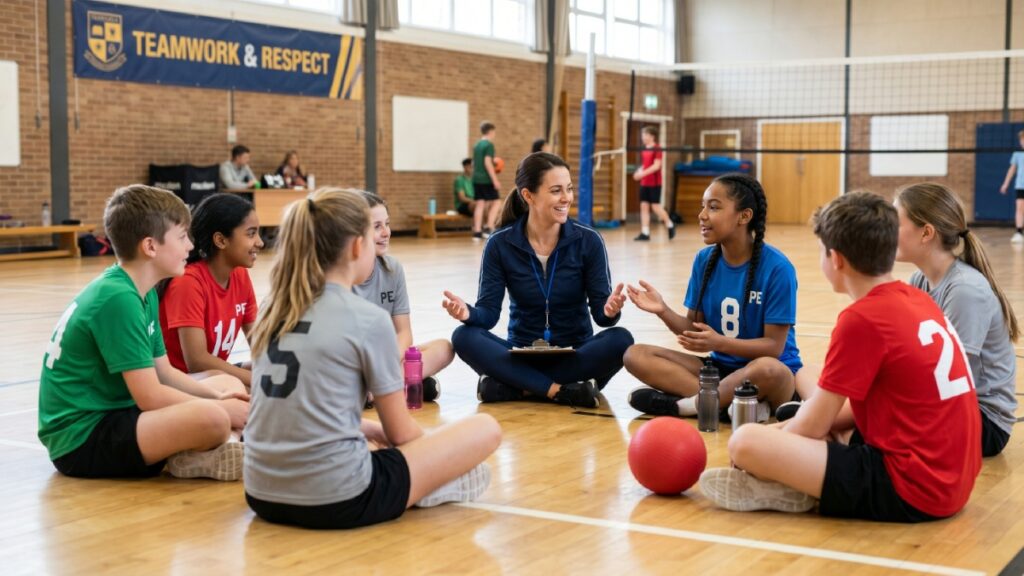
PE and Team Sports Debriefs
A five-minute debrief after team games, focused on how communication and emotional regulation affected the outcome (not just who won), transforms PE from purely physical activity into relationship skills practice. Questions like “What happened when someone got frustrated—how did the team respond?” extend the learning beyond the activity itself.
Common Implementation Challenges and How to Address Them
No discussion of social emotional learning activities would be complete without addressing why so many well-intentioned programmes fail to produce lasting change.
Inconsistent Implementation Across Staff
When SEL activities depend entirely on individual teacher enthusiasm, students experience wildly different emotional environments depending on which classroom or which day. Schools that have seen the most consistent results typically build SEL practices into shared routines—every classroom doing morning check-ins, every staff member trained in the same conflict resolution language—rather than leaving it to individual discretion.
Treating SEL as a Quick Fix for Behaviour Problems
Perhaps the most common pitfall: introducing SEL activities reactively, after behavioural problems have already escalated, and expecting rapid results. In practice, the schools seeing the strongest outcomes treat SEL as preventative infrastructure built over months and years, not crisis intervention. Activities introduced during a behavioural crisis often get abandoned once the immediate issue passes, before they’ve had time to become genuinely effective.
Lack of Parent and Carer Involvement
SEL skills practised at school but contradicted or ignored at home develop more slowly and inconsistently. Simple communication—a weekly newsletter explaining the emotional vocabulary being used in class, so parents can reinforce the same language at home—has been shown to accelerate skill transfer significantly.
A few honest considerations worth keeping in mind:
- Time investment is real — Meaningful SEL integration adds to already full school days; expecting it to be “free” time leads to rushed, ineffective implementation.
- Not every child responds the same way — Children with additional needs, trauma histories, or neurodivergence may need adapted approaches; a one-size-fits-all activity can occasionally cause distress rather than support.
- Results take time — Noticeable shifts in classroom climate typically emerge after 8-12 weeks of consistent practice, not days.
Conclusion
Building genuinely effective social emotional learning activities comes down to a few consistent principles: rotate across all five core competencies rather than focusing only on emotion identification, embed activities into daily routines rather than treating them as occasional add-ons, and give children real practice opportunities—peer mediation, genuine decision-making, structured perspective-taking—rather than passive lessons about feelings.
The activities covered here aren’t quick fixes, and any approach promising instant transformation deserves scepticism. What they offer instead is a foundation that, built consistently over a term or school year, genuinely shifts how children navigate their emotions, their relationships, and the decisions that shape their daily lives.
If you’re just starting out, pick one or two activities from a single competency area and commit to them consistently for several weeks before adding more. Consistency matters more than variety. Save this guide for reference as you build out your approach, and feel free to share what’s worked in your own classroom or home.
Frequently Asked Questions
How long does it take to see results from social emotional learning activities?
Most teachers and parents notice subtle shifts—children using emotional vocabulary unprompted, brief pauses before reacting—within 4-6 weeks of consistent practice. More substantial changes in classroom climate, such as reduced conflict frequency, typically emerge around the 8-12 week mark. Results depend heavily on consistency; sporadic implementation rarely produces measurable change.
Do social emotional learning activities work for children with ADHD or autism?
Yes, though adaptations matter significantly. Visual supports, shorter activity durations, and predictable routines tend to work better than open-ended discussion formats for many neurodivergent children. Some activities, like forced eye contact during sharing circles, may need modification. Consulting with a school’s SENCO or an educational psychologist helps tailor approaches to individual needs.
Can parents do social emotional learning activities at home, or is this only for schools?
Many activities translate well to home settings—feelings check-ins during car journeys, “I statement” practice during sibling disagreements, or gratitude conversations at dinner. Home implementation often has an advantage: more one-on-one time and naturally occurring emotional moments to practise in context, rather than scheduled lessons.
What’s the difference between SEL activities and just teaching good behaviour?
Behaviour management focuses on what children do; SEL focuses on building the underlying skills—self-awareness, regulation, empathy—that make positive behaviour sustainable without constant external enforcement. A child who learns to identify frustration and has practised calming strategies is less likely to need behavioural consequences in the first place.
How much time should schools dedicate to SEL each day?
There’s no universal figure, but many effective programmes use 10-15 minutes for dedicated morning routines, plus integration throughout the day within academic subjects. Schools attempting hour-long dedicated SEL sessions often find them harder to sustain than shorter, more frequent touchpoints embedded into existing routines.
Are there free resources for social emotional learning activities?
Yes. Organisations like CASEL provide free framework guides and activity outlines. Many local authorities and educational psychology services also offer free training sessions for staff. Cost shouldn’t be a primary barrier, though staff training time is often the more significant investment than activity materials themselves.
What should I do if an SEL activity seems to upset a particular child?
Pause that activity for that child and observe rather than push through. Some activities—particularly those involving sharing personal feelings publicly—can be genuinely distressing for children with certain home circumstances or anxiety profiles. Offer alternative, lower-pressure ways to participate, such as writing instead of speaking, and consult with parents or carers if the pattern continues.