
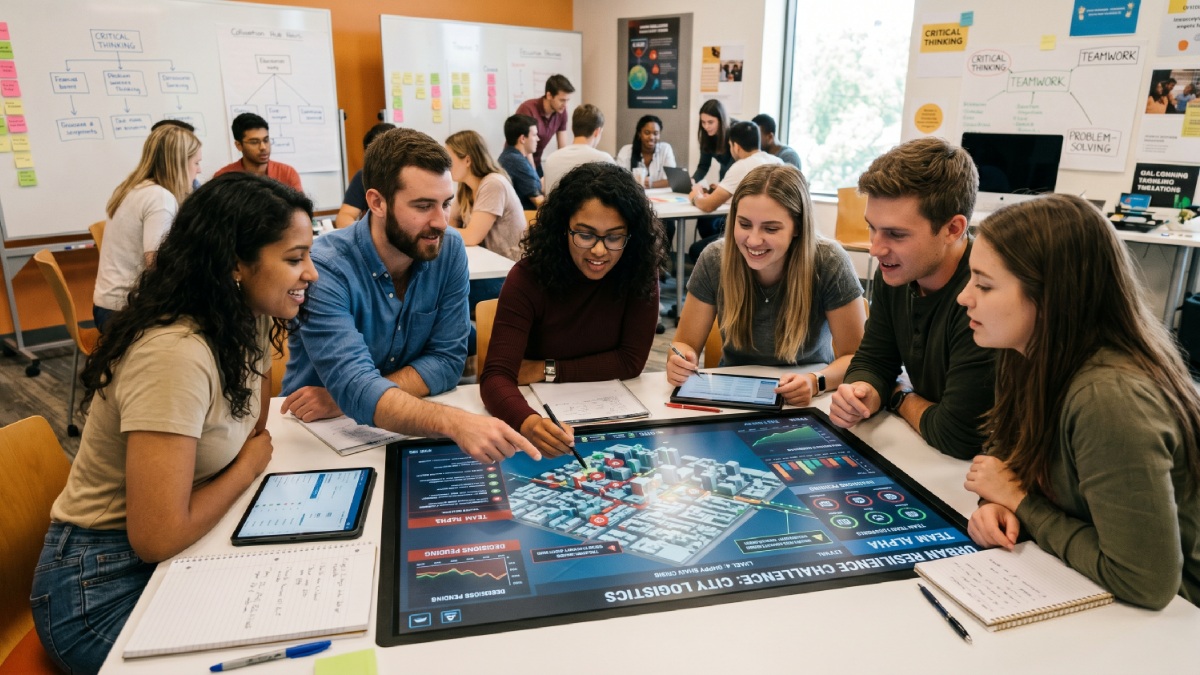
Game-based learning has moved from a niche classroom experiment to one of the most discussed strategies in modern education. Teachers, corporate trainers, and edtech developers are all asking the same question: does turning lessons into games actually improve outcomes, or is it just a passing trend?
The numbers suggest it’s far more than a trend. Recent industry analyses show the global game-based learning market growing rapidly, driven by demand for engagement, retention, and measurable skill development. Students who once zoned out during lectures are now solving puzzles, competing in simulations, and leveling up their way through curriculum.
This guide breaks down what game-based learning really means, how it differs from gamification, the research behind why it works, and how educators and trainers can implement it effectively. Whether you’re a teacher exploring new tools or a corporate L&D manager building a training program, you’ll find a complete roadmap here.
What Is Game-Based Learning?
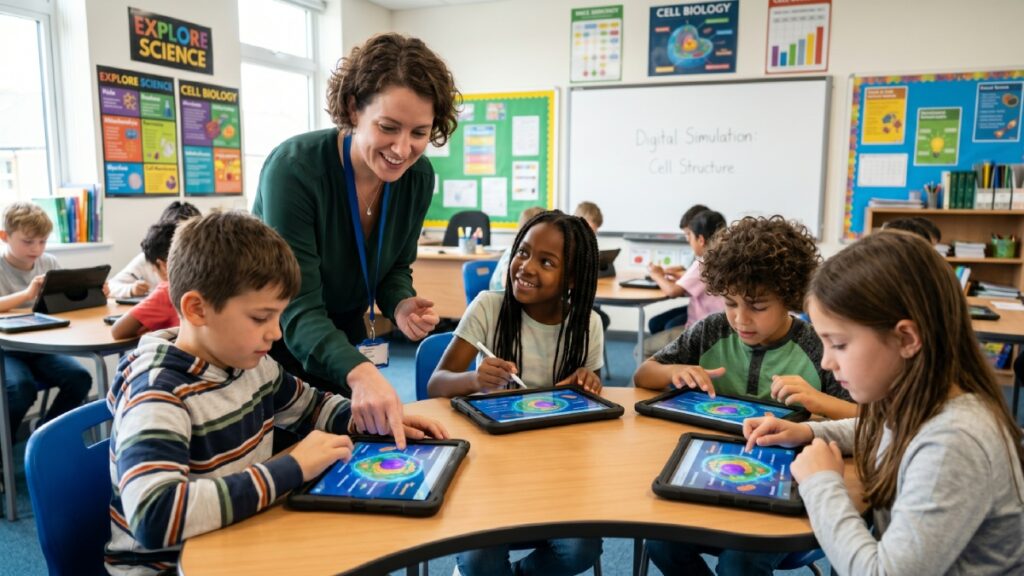
Game-based learning (GBL) refers to the use of actual games, digital or analog, as the primary vehicle for teaching content and skills. Unlike traditional instruction followed by a quiz, the game itself becomes the learning experience.
In a game-based learning environment, students might navigate a historical simulation to understand World War II diplomacy, manage a virtual ecosystem to grasp biology concepts, or solve coding puzzles to learn programming logic. The objectives of the curriculum are embedded directly into the mechanics of the game.
Game-Based Learning vs. Gamification
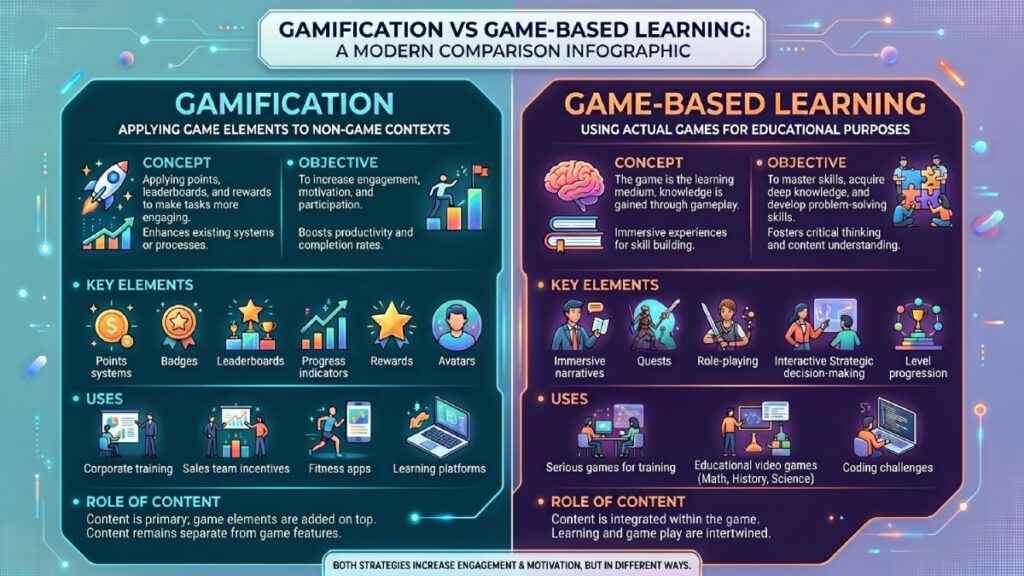
These two terms get confused constantly, but they describe different approaches.
Gamification adds game-like elements, such as points, badges, leaderboards, and streaks, to a traditional learning activity. The underlying lesson stays the same; only the motivational layer changes.
Game-based learning uses a complete game as the lesson itself. The game mechanics, rules, challenges, and feedback loops are the curriculum.
| Aspect | Gamification | Game-Based Learning |
|---|---|---|
| Core structure | Traditional lesson + game elements | The game is the lesson |
| Example | Earning badges for completing worksheets | Playing a city-builder to learn economics |
| Learning happens | Through the original content | Through gameplay itself |
| Motivation source | External rewards | Intrinsic engagement and challenge |
| Best for | Boosting participation in existing courses | Teaching complex systems and skills |
Why Game-Based Learning Works: The Research
Educators have debated the value of play in learning for decades, but recent cognitive science research has clarified why games are such effective teaching tools. Several classroom-focused case studies and implementation examples published by Edutopia highlight how game-based learning can improve student engagement and participation.
Active Engagement Over Passive Reception
Traditional lectures position students as recipients of information. Games position them as active participants making decisions, facing consequences, and adjusting strategies. This active processing strengthens memory encoding far more than passive listening.
Immediate Feedback Loops
One of the most powerful features of games is instant feedback. A student who makes a mistake in a game finds out immediately and can try again. Compare that to a traditional essay, where feedback might arrive a week later, long after the thinking that produced the error has faded.
Safe Failure Environments
Games normalize failure as part of the process. Losing a level isn’t shameful, it’s expected, and trying again is built into the experience. This reduces the fear of being wrong that often paralyzes students in traditional classrooms.
Intrinsic Motivation
Well-designed games tap into curiosity, mastery, and autonomy, the three pillars of intrinsic motivation identified in self-determination theory. Students who are intrinsically motivated tend to persist longer and retain information better than those motivated purely by grades.
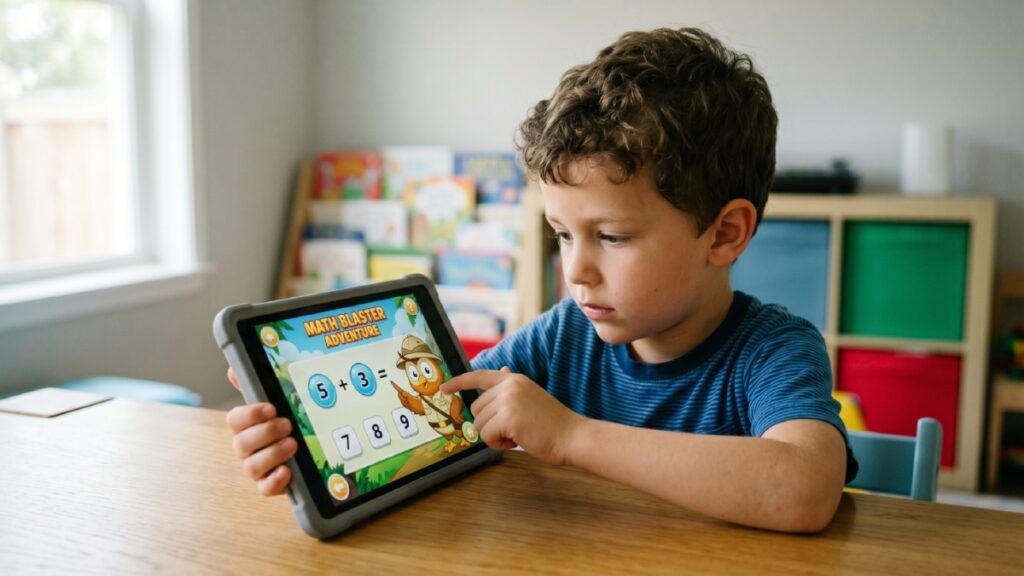
Quick Insight: Studies published in peer-reviewed journals such as Computers & Education have found that simulation-based learning can improve knowledge retention and skill transfer compared to lecture-only instruction, particularly in complex skill-based environments.
Types of Game-Based Learning
Game-based learning isn’t a single format. It spans a wide range of tools and approaches, each suited to different goals.
1. Digital Simulations
Simulations recreate real-world systems, businesses, ecosystems, cities, or historical events, allowing students to experiment with cause and effect without real-world consequences. Business students might run a virtual company; biology students might manage a simulated population of organisms.
2. Educational Video Games
Purpose-built games designed around specific curriculum standards. These range from math-focused arcade games for younger students to complex strategy games used in high school history and economics classes.
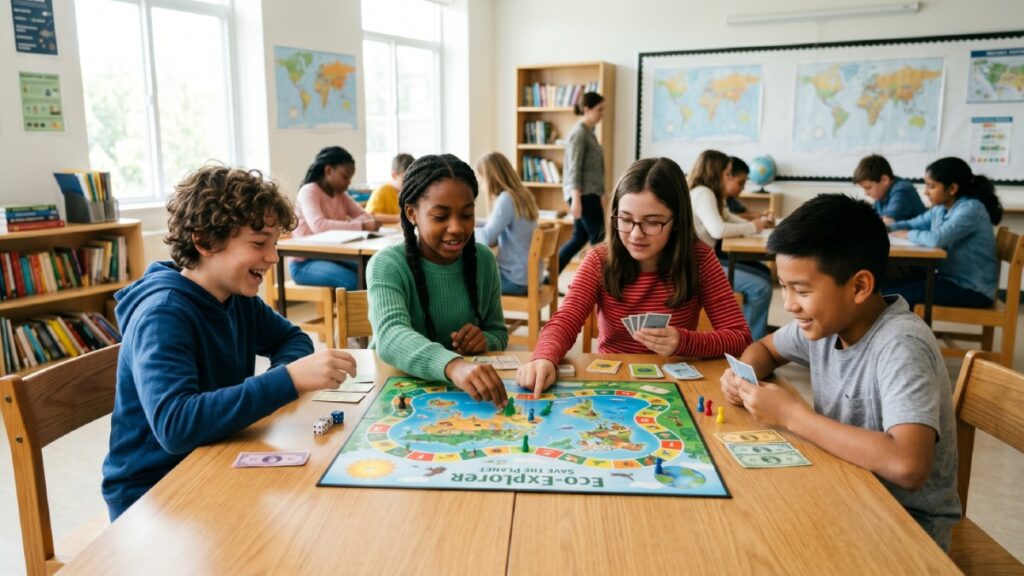
3. Tabletop and Board Games
Analog games remain powerful tools, especially for teaching strategy, negotiation, resource management, and collaboration. Many teachers design custom board games tied directly to their subject matter.
4. Escape Room-Style Challenges
Physical or digital escape rooms require students to solve a series of content-based puzzles to “escape” within a time limit. This format works well for review sessions and team-building activities.
5. Role-Playing Scenarios
Students take on character roles within a structured scenario, often used in language learning, history, ethics, and social studies to build empathy and perspective-taking skills.
6. Esports and Competitive Gaming Programs
An emerging category in K-12 and higher education, school-sponsored esports programs teach teamwork, communication, and strategic thinking while engaging students who might not connect with traditional extracurriculars.
Benefits of Game-Based Learning
The advantages extend well beyond simply making lessons “more fun.” When implemented thoughtfully, GBL delivers measurable outcomes across several dimensions.
Improved retention. Active participation and repeated practice through gameplay help concepts stick longer than one-time exposure through lectures.
Stronger problem-solving skills. Games often require players to analyze situations, weigh options, and adjust strategies, building critical thinking skills that transfer to other contexts.
Increased engagement for reluctant learners. Students who struggle with traditional formats often thrive in game-based environments, where progress feels achievable and mistakes carry less social stigma.
Real-time differentiation. Many digital learning games adjust difficulty based on player performance, providing built-in differentiation without extra work for teachers.
Collaboration and communication skills. Multiplayer and team-based games naturally build soft skills that are difficult to teach through worksheets.
Data-driven insights for educators. Digital game platforms often generate detailed analytics on student performance, helping teachers identify gaps quickly.
Common Misconceptions About Game-Based Learning
Despite growing adoption, several myths continue to hold educators back from exploring GBL effectively.
Myth 1: “Games Are Just a Reward for Finishing Real Work”
This confuses gamification with game-based learning. In true GBL, the game is the work, not a break from it.
Myth 2: “Game-Based Learning Only Works for Younger Students”
While younger learners respond enthusiastically to game formats, simulations and serious games are widely used in higher education, medical training, military education, and corporate leadership development.
Myth 3: “Games Replace the Teacher”
Effective game-based learning still requires facilitation. Teachers guide reflection, connect gameplay to learning objectives, and help students articulate what they discovered.
Myth 4: “It’s Too Expensive to Implement”
While some platforms carry licensing costs, many effective game-based learning approaches, including custom board games, role-play scenarios, and free digital tools, require minimal budget.
How to Implement Game-Based Learning: A Step-by-Step Approach
Bringing game-based learning into a classroom or training program works best when approached methodically rather than as a one-off novelty. Organizations such as ISTE provide frameworks and best practices for integrating educational technology into learning environments effectively.
- Define clear learning objectives first. Choose or design a game only after identifying exactly what skill or concept students need to master.
- Match the game format to the objective. A simulation suits systems thinking; a role-play suits empathy and communication; a puzzle game suits logical reasoning.
- Pilot with a small group. Test the game with a subset of students before rolling it out to an entire class or cohort.
- Build in reflection time. Schedule structured debriefs after gameplay so students can connect what happened in the game to real-world concepts.
- Track outcomes, not just engagement. Engagement is valuable, but pair it with assessment data to confirm the game is actually building the intended skills.
- Iterate based on feedback. Adjust difficulty, pacing, or rules based on student and teacher feedback after each session.
Quick Implementation Checklist
- [ ] Learning objective clearly defined
- [ ] Game format matches the objective
- [ ] Time allocated for setup and debrief
- [ ] Assessment method identified
- [ ] Technology requirements confirmed (if digital)
- [ ] Backup plan for technical issues
Game-Based Learning in Corporate Training
Beyond K-12 and higher education, businesses have embraced game-based learning for onboarding, compliance training, and leadership development.

Simulations let new hires practice high-stakes scenarios, customer complaints, safety procedures, sales negotiations, without real-world risk. Leadership simulations place managers in scenarios requiring decisions under pressure, with branching outcomes that reveal the consequences of different leadership styles.
Compliance training, often dreaded for being dry and repetitive, has seen measurable improvements in completion rates and retention when converted into scenario-based games rather than static slide decks.
Tools and Platforms Worth Exploring
While specific platform recommendations change quickly as the edtech landscape evolves, categories worth exploring include:
- Simulation builders that allow educators to create custom branching scenarios
- Classroom game platforms offering ready-made educational games aligned to standards
- Virtual world platforms used for collaborative project-based learning
- Board game design tools for educators creating custom physical games
When evaluating any platform, prioritize alignment with curriculum standards, accessibility features, data privacy compliance, and evidence of learning outcomes rather than just visual polish.
The Future of Game-Based Learning
Looking toward the rest of 2026 and beyond, several trends are shaping where GBL is headed.
AI-personalized game experiences are becoming more common, with games adjusting narrative paths, difficulty, and feedback based on individual student data in real time.
Immersive technologies, including virtual and augmented reality, are expanding what’s possible for simulation-based learning, particularly in fields requiring spatial or procedural skills like healthcare and engineering.
Cross-curricular integration is growing, with games designed to teach multiple subjects simultaneously rather than isolated single-subject content.
Accessibility-first design is becoming a baseline expectation, ensuring game-based learning tools work for students with diverse needs and abilities.
Conclusion
Game-based learning represents a fundamental shift in how educators approach instruction, moving from passive content delivery to active, experiential discovery. The research consistently supports its effectiveness for engagement, retention, and skill development across age groups and subjects.
Whether you’re a classroom teacher experimenting with a custom board game, a curriculum designer building digital simulations, or a corporate trainer rethinking onboarding, the principles remain the same: define clear objectives, choose the right format, and build in reflection.
Game-based learning isn’t about replacing good teaching, it’s about giving good teaching a more powerful vehicle.
Frequently Asked Questions
What is game-based learning in simple terms?
Game-based learning is an educational approach where students learn course content by playing a game designed around that content, rather than the game being a separate reward or break from learning.
Is game-based learning effective for adults?
Yes. Simulations and serious games are widely used in corporate training, medical education, and professional development because they allow safe practice of high-stakes scenarios.
What’s the difference between game-based learning and gamification?
Gamification adds game elements like points and badges to traditional lessons. Game-based learning uses an entire game as the lesson itself.
Does game-based learning require technology?
No. While many popular examples are digital, board games, role-play scenarios, and physical puzzle challenges are all effective forms of game-based learning that require no technology.
What subjects work best with game-based learning?
Subjects involving systems, strategy, and decision-making, such as economics, history, biology, and language arts, tend to translate especially well into game formats, though nearly any subject can be adapted.
How do teachers assess learning in a game-based environment?
Through a combination of in-game performance data, structured reflection or debrief sessions, and traditional assessments that measure whether skills practiced in the game transfer to other contexts.
Can game-based learning help students with learning differences?
Many students who struggle with traditional formats respond well to game-based environments, which often allow for self-paced progress, multiple attempts, and reduced social pressure around mistakes.